The temperature project

Anyone who knits, crochets or crafts in general I guess, will have heard of this. The basic premise is that you work a colour of a project every day for a year based on that days temperature.

Lots of people do blankets, so many rows per day, others do scarves and I’ve recently seen beautiful embroidered trees with one leaf per day.

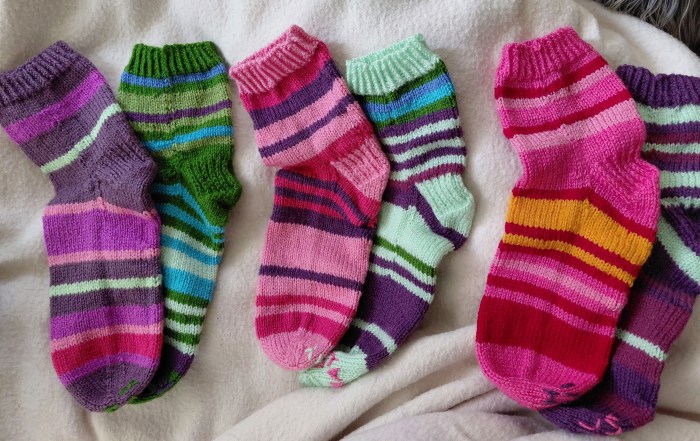
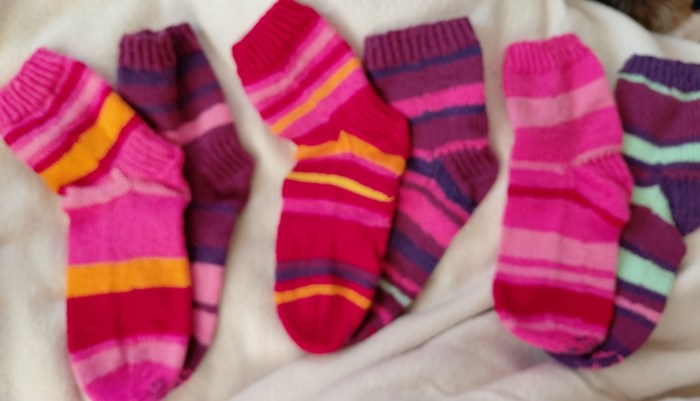
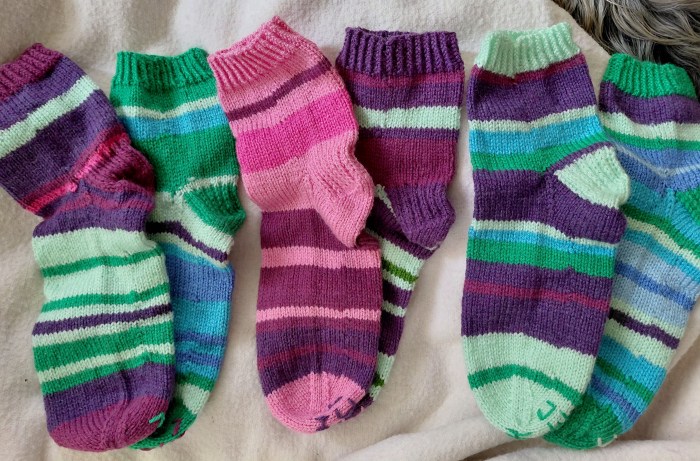
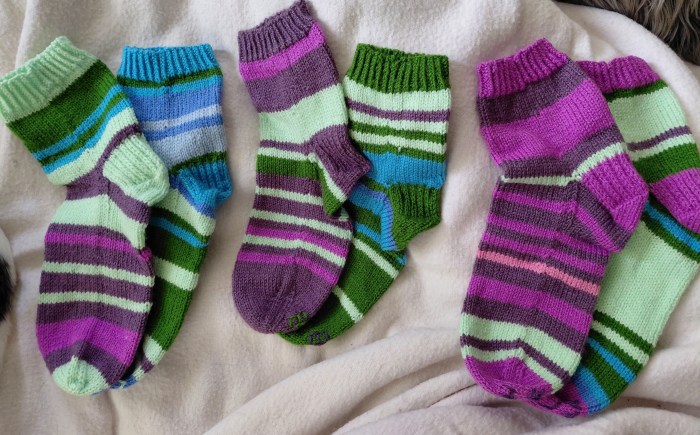
Having made a scarf, then a blanket I decided to venture further to socks!. One pair a month for 12 months. I then decided to use my year if birth.

Sounds simple on the face of it, go online, search for the Data(accuweather us great) and off you go. But no not so simple. Just to make me feel old the Data online didn’t go back that far!

What to do.

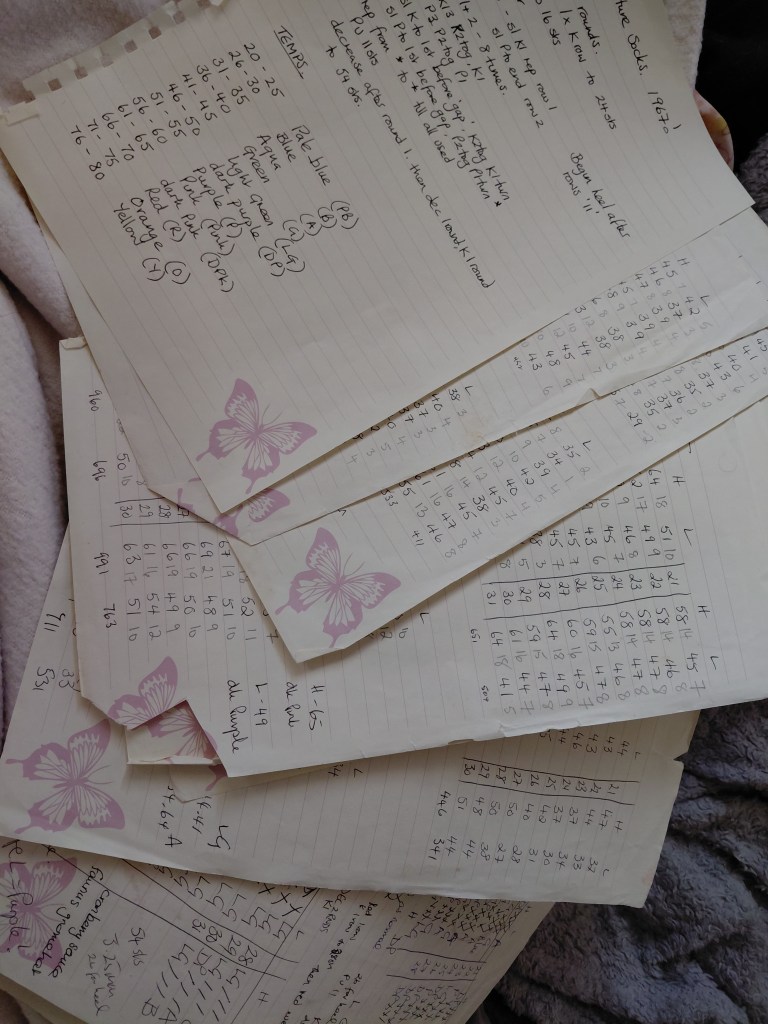
I decided to email the met office! I was very lucky to have my email land in the inbox of a lady called Joan. She responded that she also couldn’t access electronic data but that she had been down to the archive strongholds and taken photos of all data available for my home town for my chosen year, which she not only sent me but explained what each column was for! What a treasure.

So..now I had my data. I then allocated a colour to a set of temperatures.

• 20-25 – pale blue

• 26-30 – blue

• 31-35 – aqua

• 36-40 – green

• 41-45 – light green

• 46-50 – dark purple

• 51-55 – purple

• 56-60 – pink

• 61-65 – dark pink

• 66-70 – red

• 71-75 – orange

• 76-80 and above – yellow

Next job was to work out how many rounds per day, yarn choice, and whether to do identical or fraternal socks. I decided on fraternal, one high temps, one low. I added cuffs, heels and toes in the average high and low respectively.

So my calculations began. Lots of paperwork, lots of maths before I could even start.

This is what I came up with!

DK yarn – amounts determined by temperature!

3.75 mm dpns or needles of your choice
Cast on 54 sts

CUFF

• k1, p1 rib fir 8 rounds using average temperature (low or high depending where you want to start)

LEG

Knit 3 rounds per day for 10 days

HEEL

work as below, or preferred heel, in high or low temp

Working back and forth on the 26 sts (leave other sts on hold),

row 1. (Slip1, knit1) rep to end

row 2. Slip 1, purl to end

repeat rows 1 & 2 another 4 times making 10 rows in total

next. Slip 1, knit 13, k2tog, turn

next. Slip 1, purl 3, p2tog, p1 turn

**next. Slip1, knit to 1 stitch before the gap that was made, k2tog, k1 turn

next. Slip 1, purl to 1 stitch before the gap, p2tog, p1, turn**

repeat the last 2 rows (from **-**) until all sts have been used. Place a stitch marker in the centre of these sts as this is your new beginning of round.

Now, joining in the next days colour at the beginning of the round, knit to the end of the heel then pick up and knit 11 sts down one side of the heel, knit across the held sts, pick up and knit 11 sts along the other side of the heel to the beginning again.

Assuming you are working on dpns you should have the heel sts plus 11 picked up sts on the first needle, needle 1, 28 sts on needle 2, and the 11 picked up sts plus remaining heel sts on needle 3

DECREASING

round 1. Knit to 3 sts before end of needle 1, k2tog, k1, knit across needle 2, needle 3 k1, k2tog, knit to end of round

round 2. Knit

repeat rounds one and 2 until you have 54 sts again not forgetting to change daily colour where needed.

continue straight working the stripes as required until you come to the end of the month.

for February work 3 rounds in high or low temperature colour before starting on the toe. For months with 30 days work 1 round of toe colour before starting on the toe. For all other months begin working on the toe

TOE

round 1. Needle 1, knit to 3 sts before end of needle, k2tog k1. Needle 2, k1, k2tog, knit to 3 sts before end of needle, k2tog, k1. Needle 3, k1, k2tog, k to end of round

round 2. Knit

rep rounds 1 & 2 to 24 sts the repeat rounds 1 only to 16 sts

kitchener sts together
Crochet Book Cover

My sister asked me if I knew how to make a book cover that she’d seen…I didn’t but said I’d give it a try!

So here it is! I’m using UK crochet terms

you will need:

any yarn and relevant sized crochet hook..e.g. dk yarn, 4mm hook

scissors, booking, stitch msrkers, a button

And a book!

start by making a magic ring..you can find really good tutorials online..(or alternatively chain 4, join with a slip stitch to make a circle and work from there)

Abbreviations

ch – chain

tr – treble

slst – slip stitch

Next: ch2, then 2 tr crochets into the magic circle (or ring), ch2, 3 tr crochet, ch2, 3 tr crochet, ch2, 3 tr crochet, ch2, sister into the top of the original ch2.

next: ch2, then (tr crochet into the top of the next 2 treble crochets up to the ch2 space. Tr crochet into the ch space, chain 2, tr crochet into the chain space) repeat another 3 times. Slst to top of the first ch2.

you should now have 4 ch spaces with 5 tr crochets between each one.

continue in this manner, increasing the number of tr crochets between the ch spaces by two each round.

the size of the book you want to cover will determine how many rounds you will need.

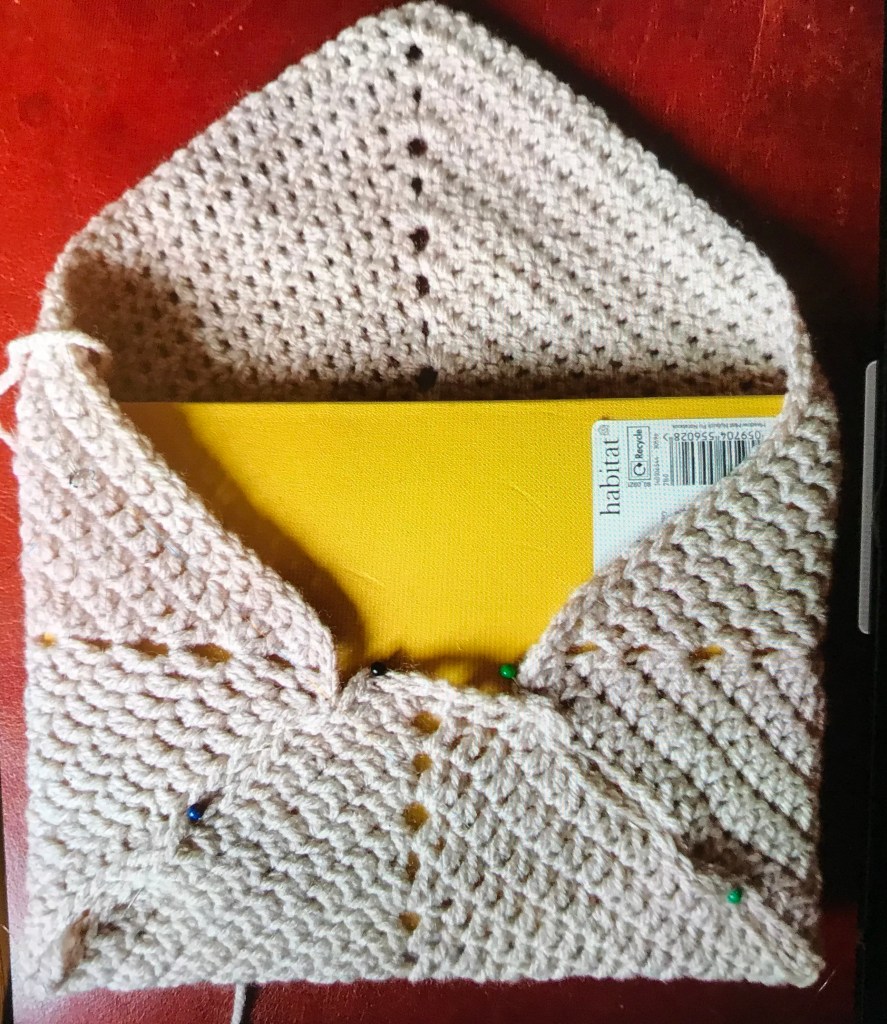
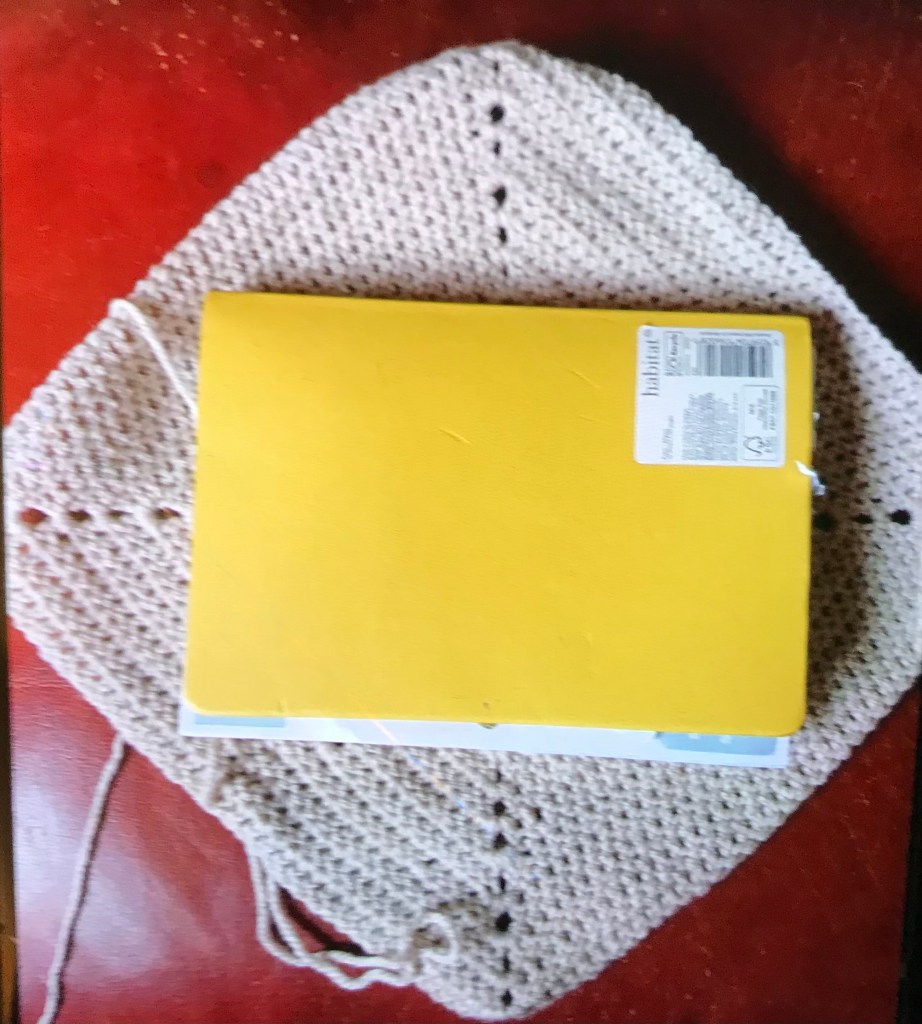
To check if it’s large enough I placed the book on the cover as below. Fold the bottom three corners as shown and crochet the two edges together with slip stitches or, alternatively, sew together, on either side as shown.

Next, using the same yarn, or another colour if you prefer, make the scalloped edge..

Ch 1, sc in same st. (skip 2 sts, 5 dc in st, skip 2 sts, 1 sc in st). Rep all the way across to the other side of the envelope fold over. If, when you get to the point, it doesn’t quite fit..e.g. the scallop wouldn’t be either immediately at the top or eveni

lay either side, I reduced the number of sts I left between skipping just one stitch at times, in order to ensure an even scallop either side or at the point if that makes sense.

once you’ve fastened off all ends, sew on a button where the point would land and you’re done.

The book should be quite a snug fit

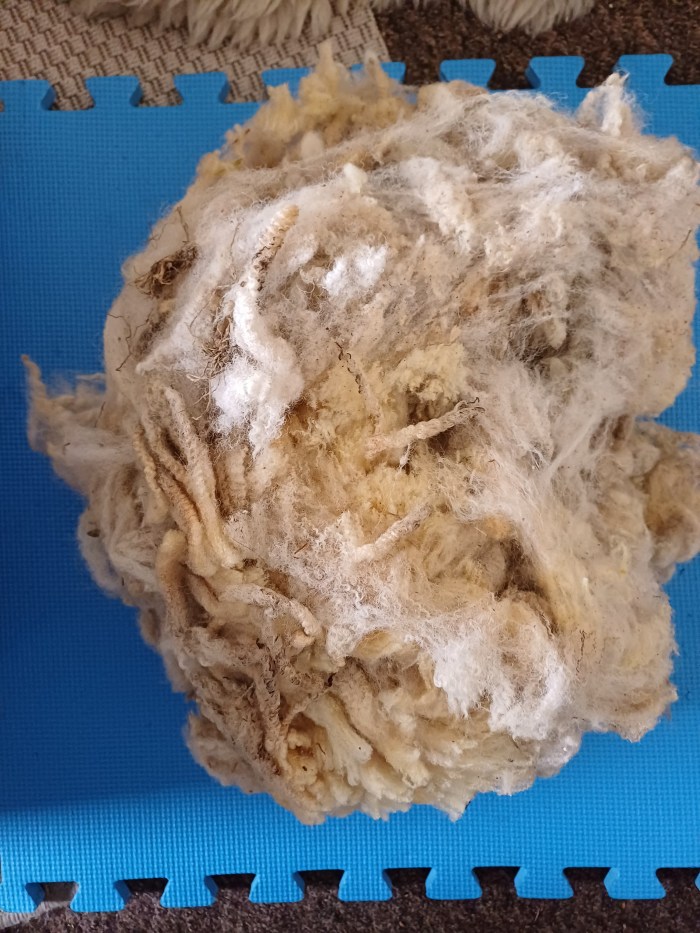
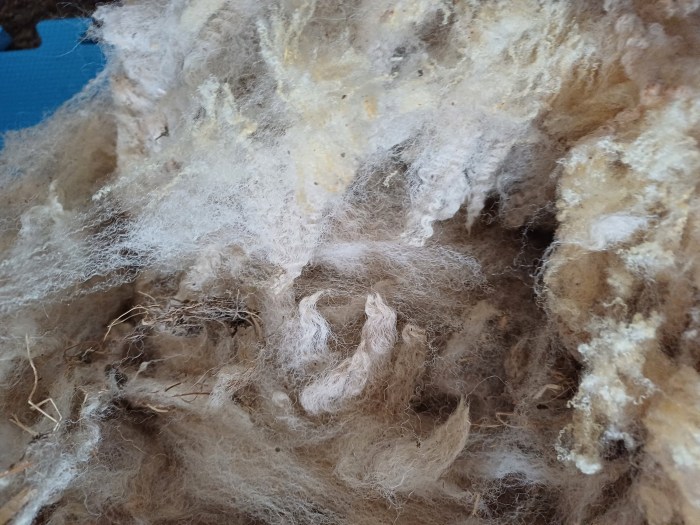
My first fleece!

On Sunday I got my very first fleece, well part of one. Not sure of the breed but I’ll find out.

I’ve been watching some YouTube videos on how to clean ready for spinning and today is the day I try a bit for the first time!.

I’m planning to just clean a small amount first, see how it goes, then, once dry, I can card then spin it to see how it goes. All being well I’ll then do the rest…watch this space!

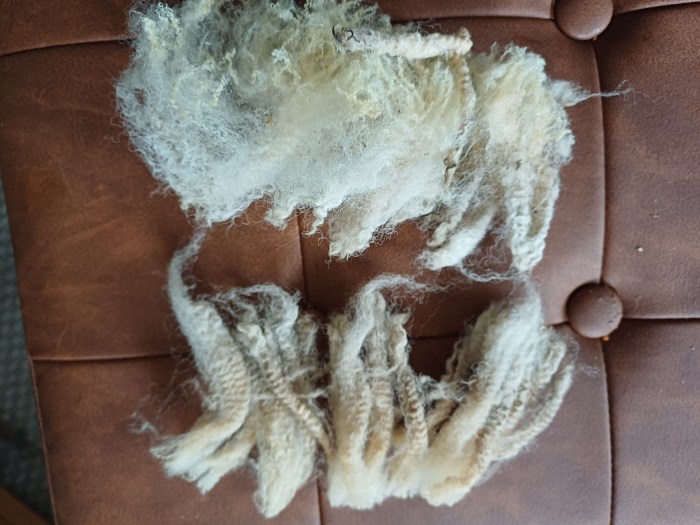
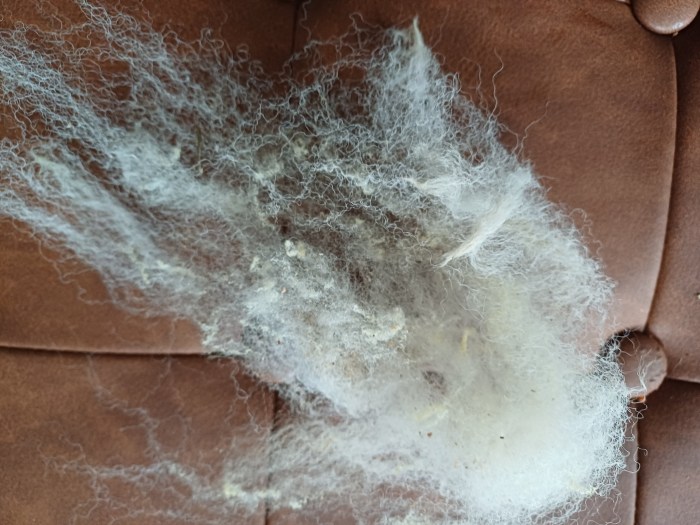
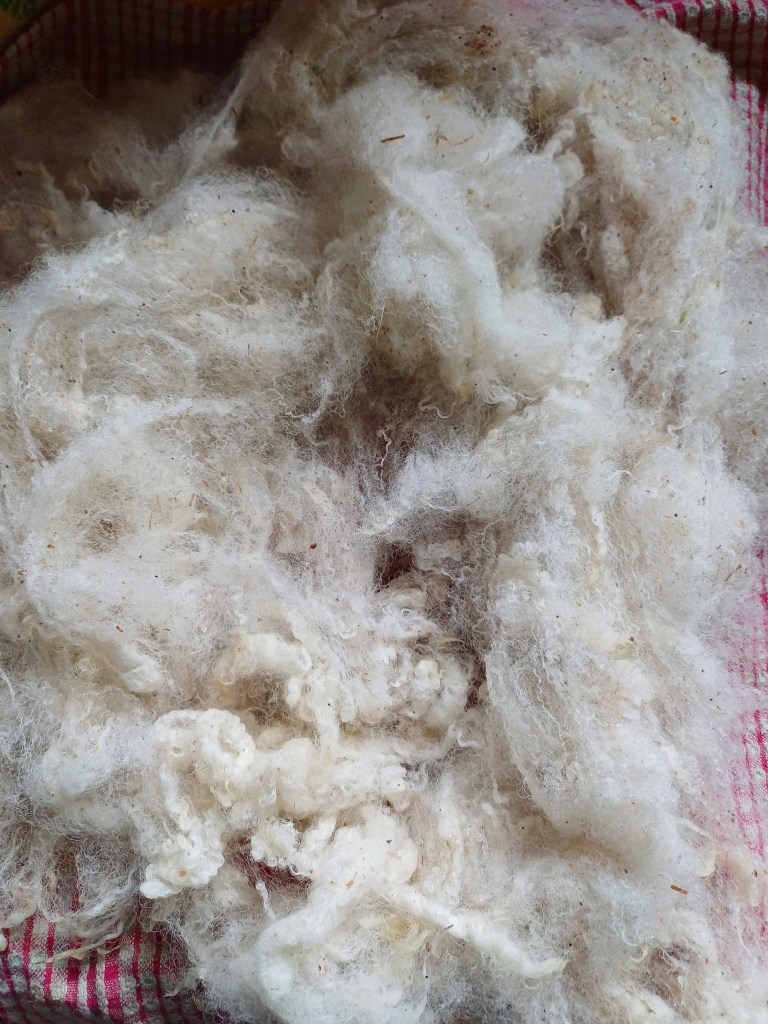
from top to bottom

  1. Quite yellow in places
  2. inside locks/outer locks
  3. fluffed out piece from near the skin
  4. lots of different colours

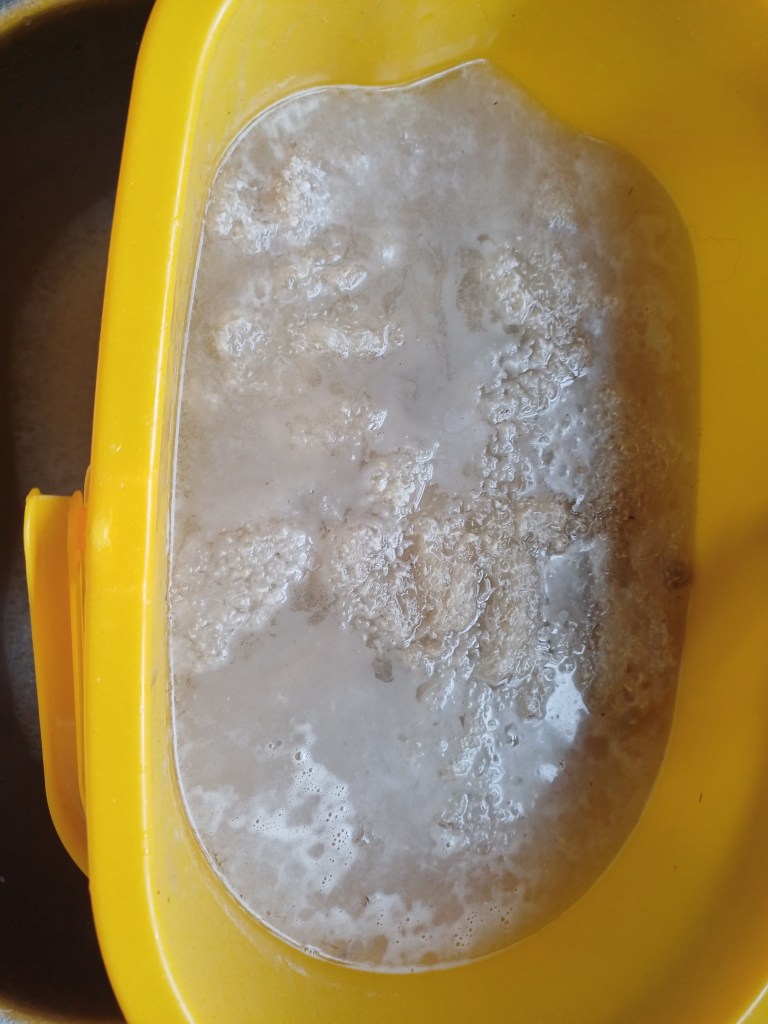
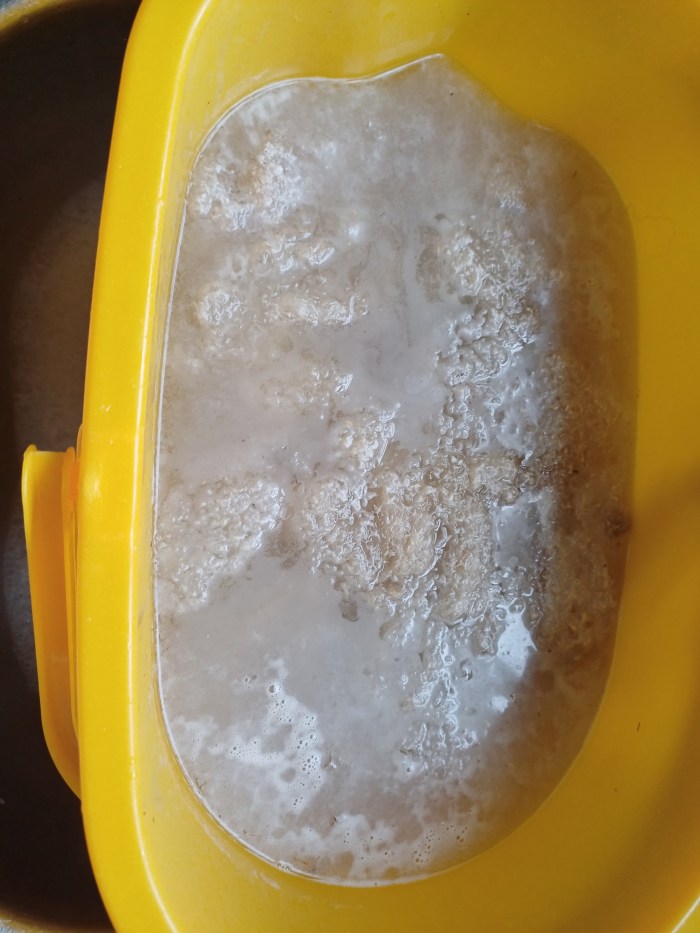
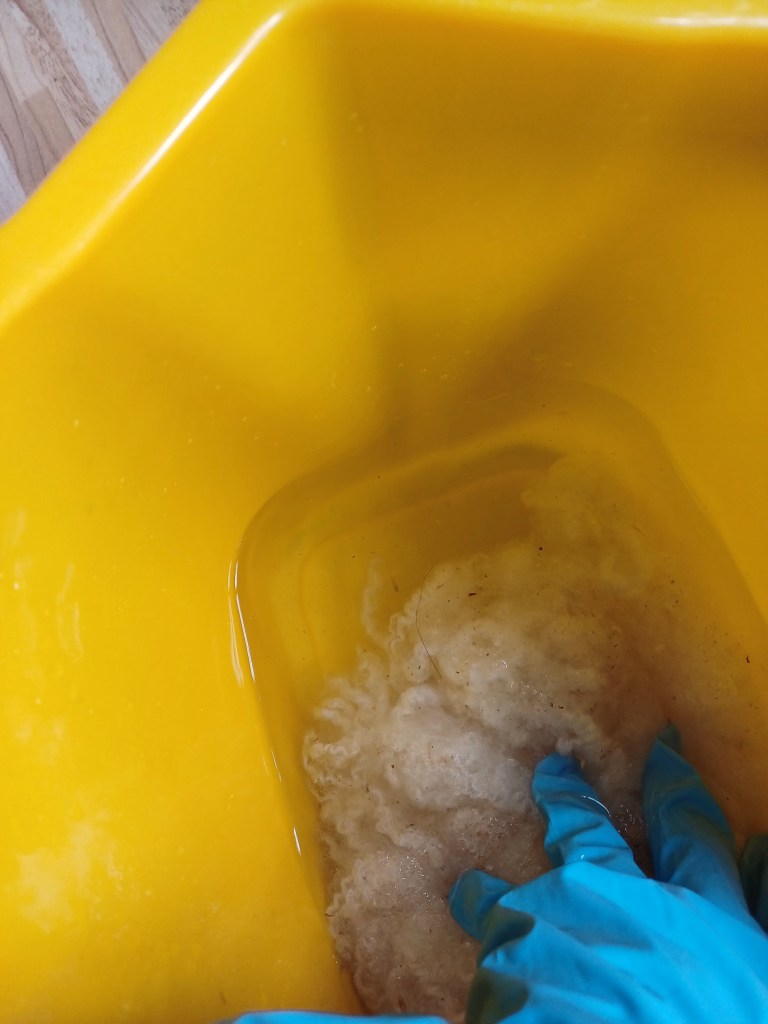
In very hot water with wool wash liquid. Making sure not to agitate it too much I added a handful or two of the fleece. I’d noted that the buckets had always been filled empty then fleece added, not fleece then water.

Immediately the water started to discolour!

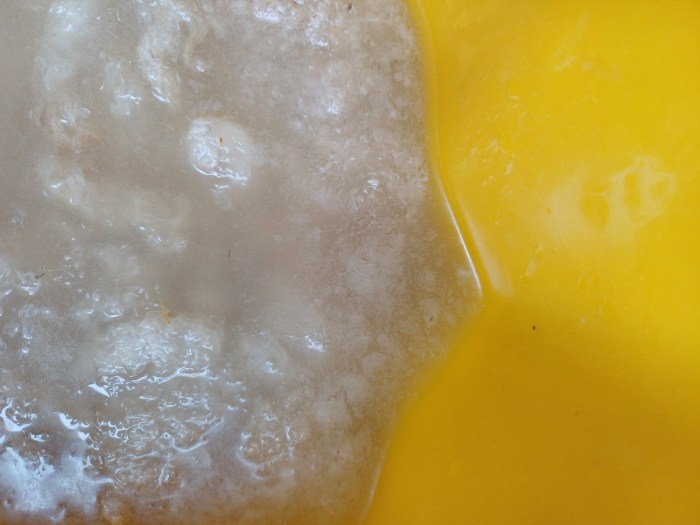
after 10 minutes you can see the lanolin starting to rise. I know not to let it cool you much as it will redcoat the fleece

once rinsed, water running clear, it’s been left out to dry

Spinning in public

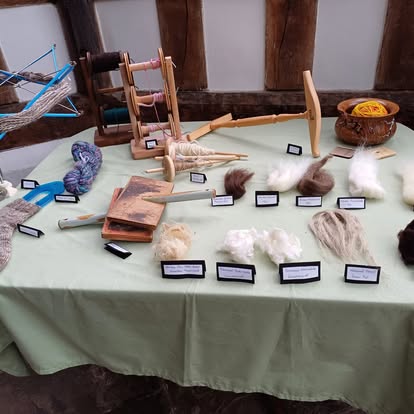
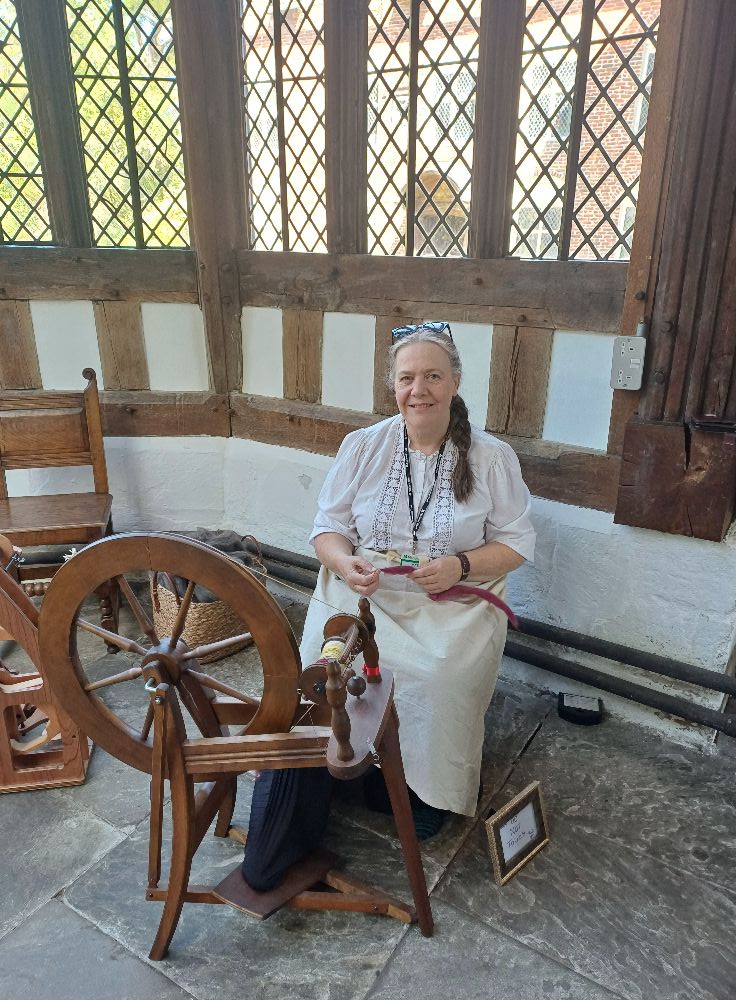
I love spinning where people can see me, ask questions and feel the joy of the whole process. In November last year I went to Rufford Old Hall in Rufford, Lancashire and spent the day spinning and talking to visitors about spinning, it’s history and processes.

To say I enjoyed it is an understatement! I loved it so much I’ve kept going back! The hall is beautiful. Owned and managed by the National Trust it brings history alive for old and young. The gardens are glorious too.

Leave a comment

ROSE BOUQUET BLANKET

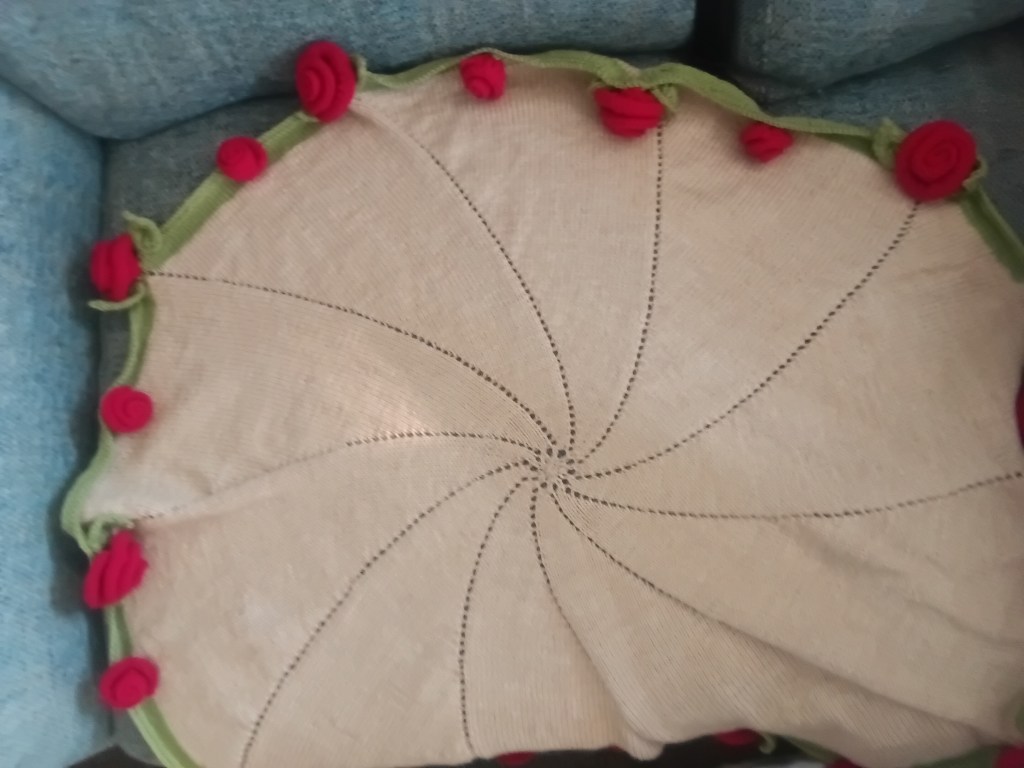
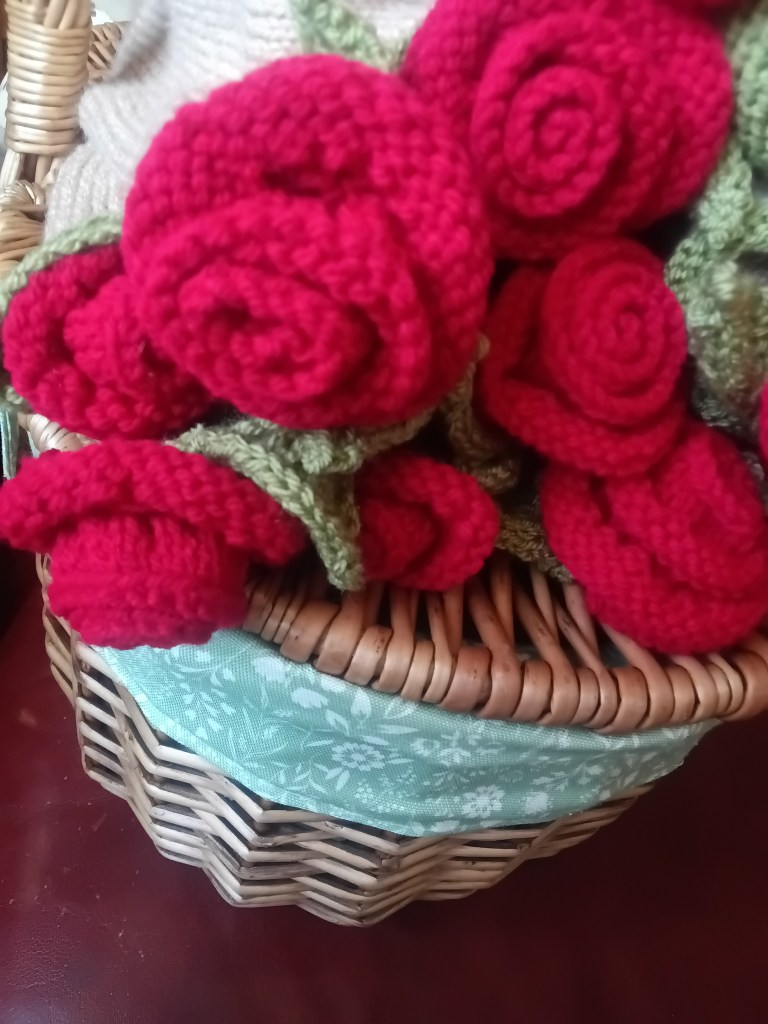
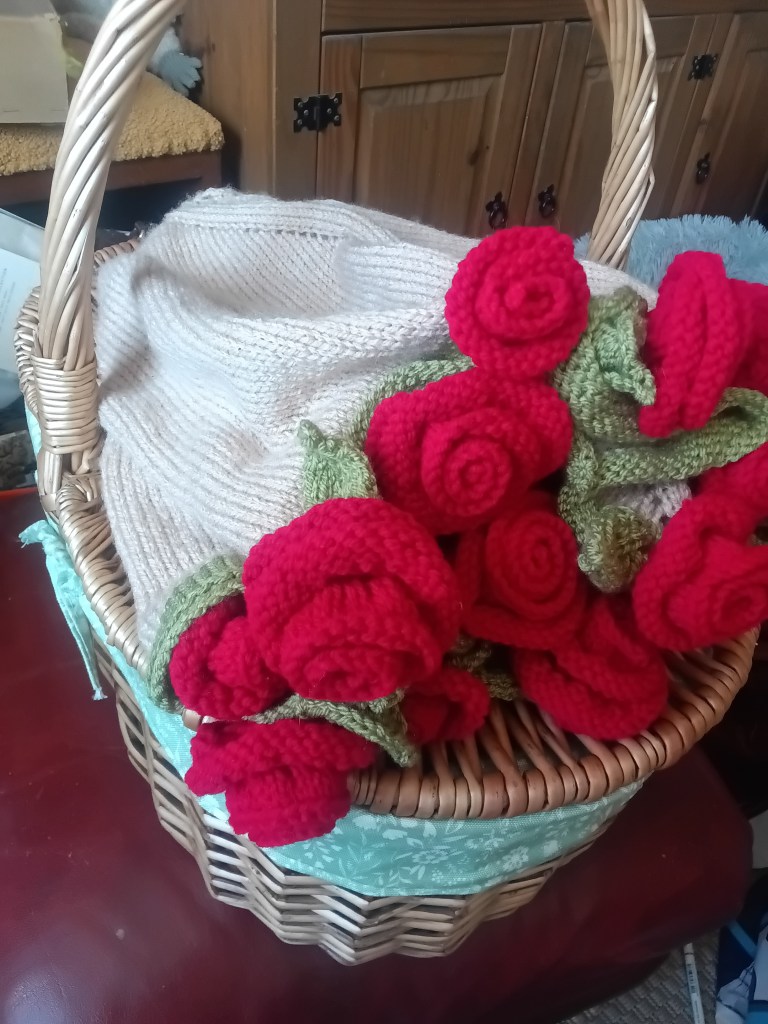
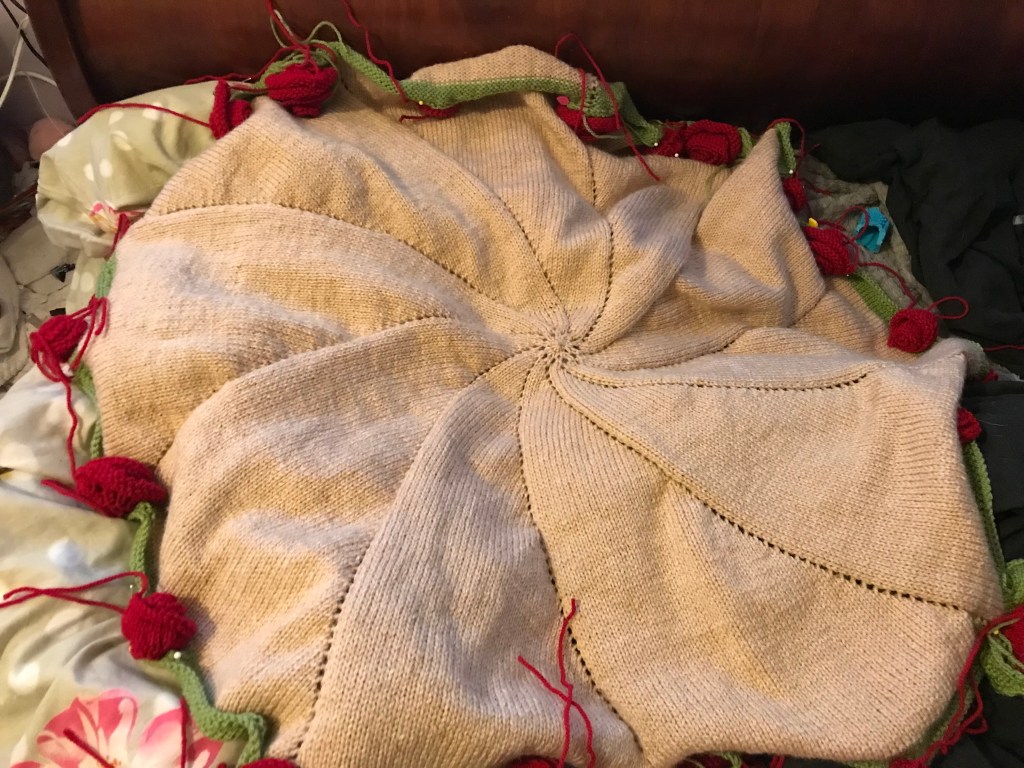
It’s finished!

I fell in love with a crochet blanket making the rounds..but I prefer to knit.

I decided to make one, so here’s the pattern for those who, like me, prefer to knit. I’m happy to share this for free but, please credit me with the pattern if you make it.

Thank you

Cate x

You will need

200g dk main colour for the blanket

100g dk green

100g dk flower colour if choice

4mm dpns; 4mm circulars 60cm and 100cm

Pins

Needle for sewing

ABBREVIATIONS

K – knit

P -purl

KFB – knit into the front AND back of the stitch to increase

YO – yarn over

Sts – stitches

PM – place marker

Rep – repeat instructions in the brackets

Sl – slip

K2tog – knit 2 sts together
P2tog – purl 2 sts together
Sl1k2togpsso – slip 1, knit 2 together and pass slipped stitch over

CO – cast on

BO – Bind off

BLANKET

CO 5 sts on dpn and knit one row.

Next: KFB in each st (10 sts)

Join to work in the round placing a marker to mark the beginning of the round

1. (k1, yo) rep to end of round

2. K all sts

3. (k2, yo) rep to end of round

4. k all sts

5. (K3, yo) rep to end of round

6. K all sts

Continue in this way adding 1 stitch to each of the 10 sections. I added a stitch marker after the yo of each section..a very different one to mark the beginning of the round.

When you have too many sts change to circulars as appropriate.

Use up all 200 grammes. It’s likely there will be 400-500 sts by the end!

Now join in the green and continue for around 6 rounds. Work one purl round without increases and then bind off.

FLOWERS

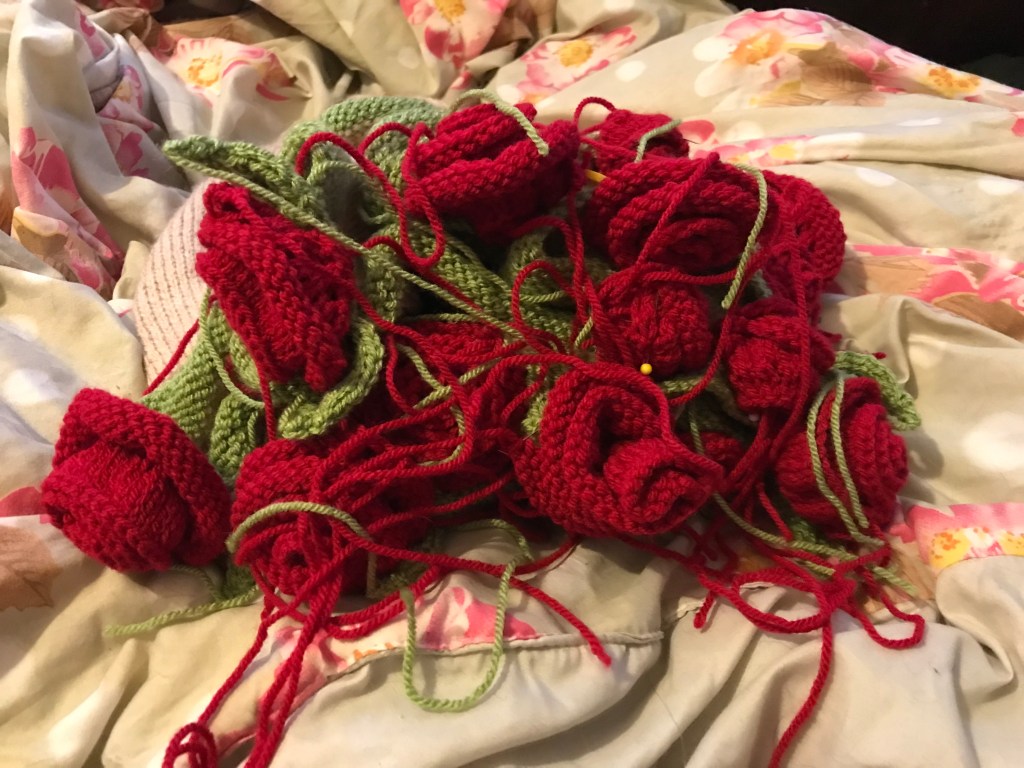
Small – make 10 in red or chosen colour

CO 24 sts

1. sl1, k to end

2 and all alternate rows. Sl1, p to end

3. Sl1 (yo, k1) rep to end

5. Sl1, k to end

7. Sl1, k to end

9. BO

Large – make 10

1. Sl1, k to end

2 and all alternate rows. Sl1, p to end

3. Sl1, (yo, k1) rep to end

5. Sl1. (yo, k1) rep to end

7. Sl1, k to end

9. Sl1, k to end

11. BO

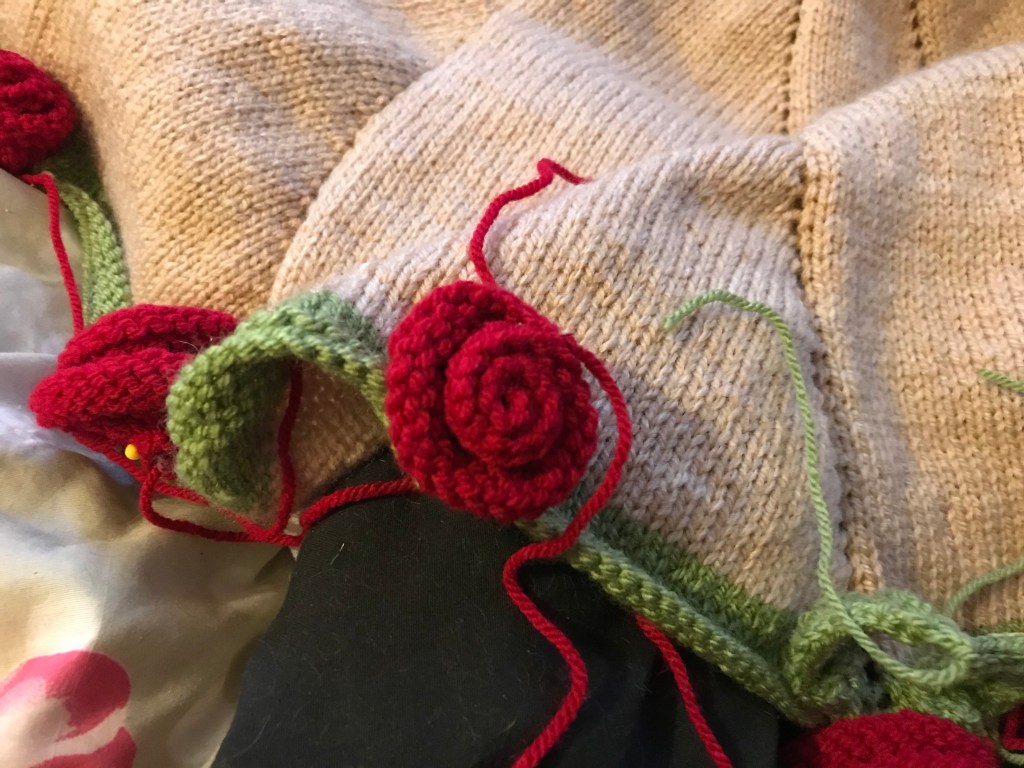
Roll up, the edges will naturally curl over. Using ends fasten off the flower to secure it then stitch to blanket. Place the large ones at the ‘points’ of the blanket where the yous are, the small ones along the edge between

Leaf – make 20 in green

CO 3 sts

1. K1, yo, k1, yo, k1

2 and all even. P

3. K2, yo, k1, yo, k2

5. K3, yo, k1, yo, k3

7. K4, yo, k1, yo, k4

9. K3, k2tog, k1, k2tog, k3

11. K2, k2tog, k1, k2tog, k2

13. K1, k2tog, k1, k2tog, k1

15. K2tog, k1, K2tog

17. Sl1k2togpsso

BO

Fasten off all ends and sew one to each side of large roses

4 responses to “ROSE BOUQUET BLANKET”

  1. Jay Avatar
    Jay

    should the only knit line be a purl line. Mine doesn’t look like yours

    Like

    1. Carry on Cate! Avatar

      Hi..do you mean in the blanket itself? It’s all knit in the round

      Like

      1. Jay Desai Avatar
        Jay Desai

        I misread the part of the round. All sorted. Can I check with the large flowers you still CO 24?

        Like

      2. Carry on Cate! Avatar

        No problem, and yes, both start with 24 sts but size is determined by how many rows are worked

        Like

Leave a comment

Just a blanket

Over the last few weeks I’ve been seeing lots of posts and ads for a rose bouquet blanket, it’s beautiful. However, it’s crocheted.

Now don’t get me wrong, I like crochet, I can crochet BUT I prefer to knit. Could I find a knitted version? Not at all. So I did what any crafty person would do, I started to make my own pattern.

Im almost finished and when I am, I’ll post the pattern x

knitted gloves

knitted gloves

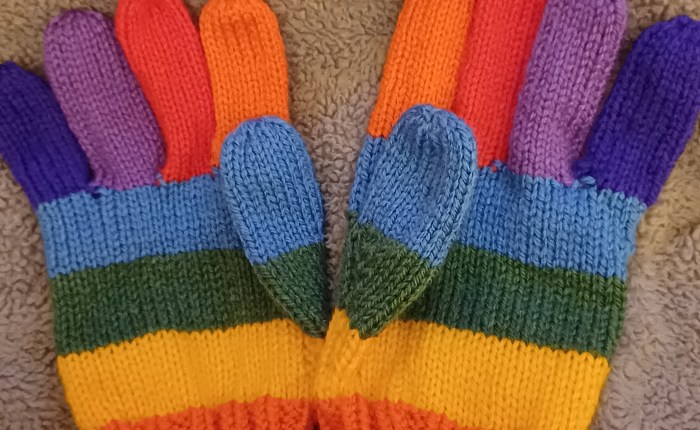
I decided to make some gloves as a gift for my mum. She’d seen the fingerless ones I was wearing and said she’d love some the same..except, not as chunky and with full fingers! Hmmm. Mine were rainbow gloves, very bright.

Anyway, I decided to go ahead and make them for Christmas so I took her out for the day, found a wool stall on a market and asked her to choose seven colours that I could use to make a jumper for one of my granddaughters. Little did she know they were for her gloves! 

I wrote the pattern as I went and here’s how I made them! If there are any errors, apologies, it’s from my scribbled notes

Rainbow gloves

Sizes: Medium

You will need:
DK yarn, 25g each of A – red, B – orange, C – yellow, D – green, E – blue, F – indigo and G – violet

One stitch marker

Waste yarn

Abbreviations

CO – cast on

PM – place marker

SM – slip marker

Sts – stitches

KFB – increase one stitch by knitting into the front and then the back of the same stitch

EOR – end of round

Rep – repeat

K2tog – knit two sts together

B & T – cut yarn and thread through all the sts, pull tight and fasten off

With colour A CO 44

PM and join to knit in the round

Rib K2, P2 for 10 rounds

Change to colour B and K2, P2 rib for another 10 rounds

Change to colour C

Next round – K5, KFB, K11, (KFB) 3 times, K to EOR

Knit 3 rounds

Thumb gusset

1.K22, PM, P1, K2, P1, PM, K to EOR

2.K to marker, SM, K1, KFB, K to 1st before marker, KFB, K to EOR

3.K to marker, P1, K to 1st before marker, P1, K to EOR

Rep rounds 2 & 3 until there are 18 sts between the makers changing to colour D after 3 more rounds ending after a round 3.  You should finish after 10 rounds in green.

Upper hand. Change to colour E

Next. K23, place 16 sts on waste yarn, K to EOR (46 sts)

Knit 10 rounds

Fingers – when putting sts on needles for fingers, divide evenly onto dpns and leave a long tail for sewing up.

Pinky – change to colour F

K6, place 34 sts on to waste yarn, cast on 2 sts then K6 sts to complete the round. Join to knit in the round. PM to mark BOR

K 19 rounds

Next round – (K2tog) rep to EOR

B & T

Ring finger – change to colour F.  Before knitting ring finger, pick up 2 sts in the cast on edge of the pinky finger

K7 sts from the waste yarn, CO 2 sts, leave next 24 sts on the waste yarn, K5 sts from the waste yarn, join to knit in the round, PM to mark BOR

Knit 23 rounds

Next round – (K2tog) rep to EOR

B & T

Middle finger – change to colour A. Before knitting ring finger, pick up 3 sts in the cast on edge of the pinky finger

K6 sts from the waste yarn, CO 3 sts, leave next 12 sts on the waste yarn, K6 sts from the waste yarn, join to knit in the round, PM to mark BOR

Knit 25 rounds

Next round – (K2tog) rep to EOR

B & T

Index finger – change to colour B

Place rem 12 sts onto needles, pick up 2 sts on cast on edge of middle finger, PM to mark BOR

K 23 rounds

Next round – (K2tog) rep to EOR

B & T

Thumb – change to colour E

Pick up 2 sts in the gap and join to work in the round.

Work 10 rounds

Next round – (K2tog) rep to EOR

B & T

Fasten off all ends, wash and dry flat

A dedicated space

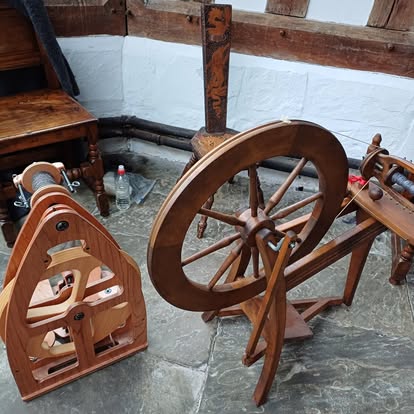
For a long time I’ve wanted a dedicated space to do, store, enjoy my many and various crafts. When our youngest left home I turned her bedroom into my craft room. It still looked and functioned, to a degree, like a craft room, but was filled with my craft things…wool, needles, material, spinning wheels, etc. and I loved it!


Unfortunately life sometimes changes without notice. One of our girls, who left home many years ago for uni, and didn’t come back, had to come back. That’s life. I could never turn any of them away. It did mean I lost my space. Lots of things were boxed up and put it the smallest, (for that read very small almost cupboard) bedroom. The big positive was that she was home…the dog loved it! My daughter, Heather, works in a pub so, as you can imagine, unsocial hours but, for him this was fabulous. Even if hubby and I were at work, often she wasn’t.

Time flies! Two years on and she’s now flying away again. I get my room back! This time it won’t resemble a bedroom as she’s taking the wardrobe and dressing table with her as well as a few other bits of furniture. This time it will truly be a craft room. I’m well aware it will take time to move everything back in and find it a home but, I’ll do it. It will probably take all summer as I can’t do much before pain hits but that’s ok. It doesn’t matter how long, what matters is the outcome.

Watch this space!

Down the rabbit hole!

So, when I embarked on my spinning journey I had no idea where it would take me..or how hooked I would become!

I never thought I would say it but, I think I may have found something I love as much as, if not more, than knitting! There, I’ve said it. Spinning gives me peace, it seems to ground me, calm me and Centre me. I can spin for hours and not even notice until I look up and see the time.

Then…..when I was at one of my fibre groups with my wheel and my latest yarn, it was mentioned that it would be lovely to weave with!..and so the rabbit hole appeared! I fell down, and I’m still falling, but with such joy and happiness!

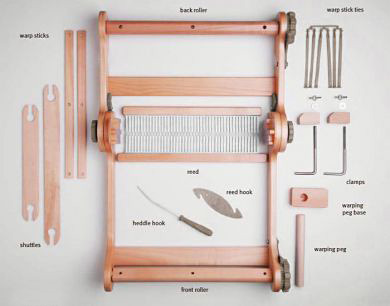
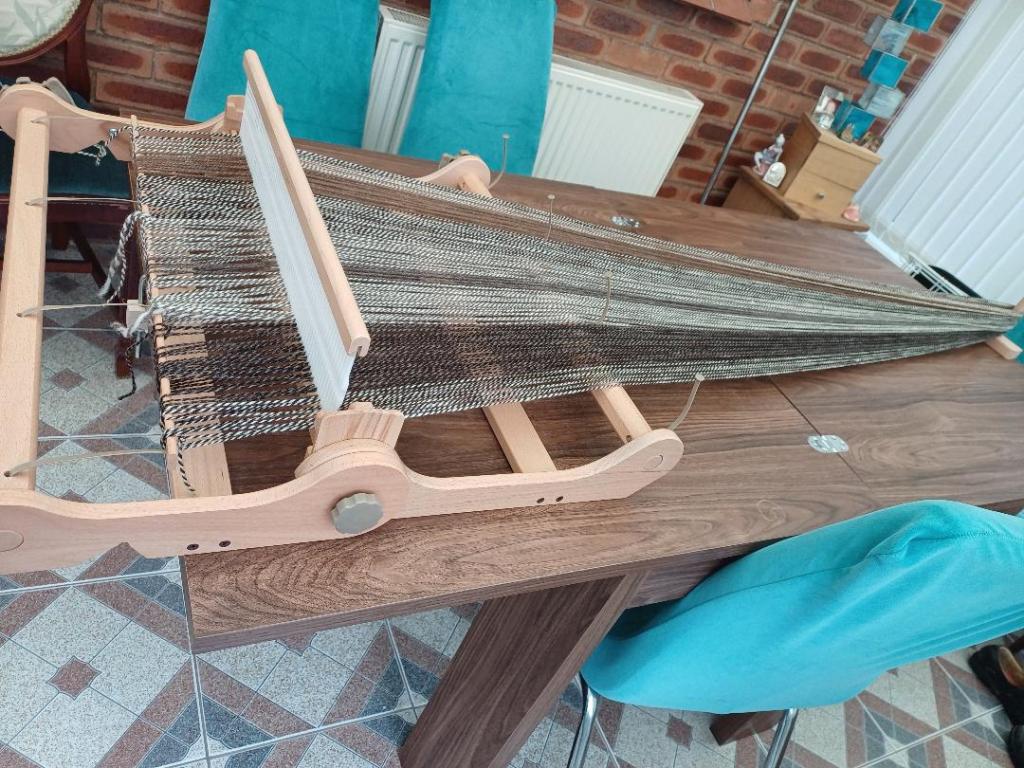
I bought a loom. It’s called a knitters loom, I think that’s purely because it folds and is, therefore, portable like my wheel. Made from the same company, Ashford, it’s a beauty to behold. I chose the 20 inch one. I decided to try some of my single spun yarn for the warp (the vertical threads) and planned to spin some more as a two ply for the weft (the horizontal one one!). It arrives with everything below, plus a bag too.

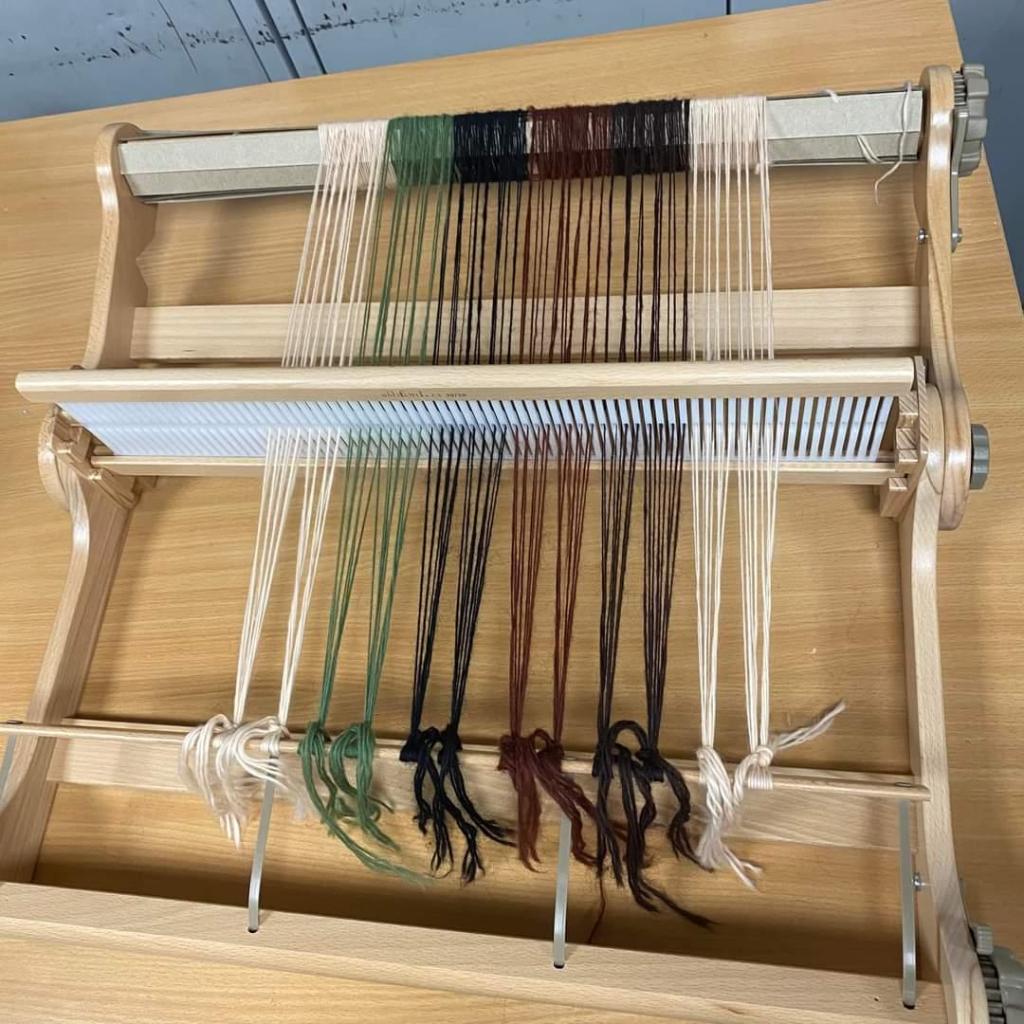
At the next group I attended I spent the whole time, with amazing support from Rachel, warping my loom. I was so proud. I was also warned that they may break as they might not be strong enough. I made the decision to carry one but be prepared to change the whole lot if they did break. It looked beautiful and only one thread broke, right at the end.

I went home and spun the yarn ready for the weft, it took quite a few hours I have to admit. I started and did about four or five passes and realised that, although they threads were holding, they were also felting together, more with each pass. I very quickly decided to stop and redo, however long it might take to do again.

Luckily I have spent a lot of time spinning since November and had some two ply that I could use immediately.

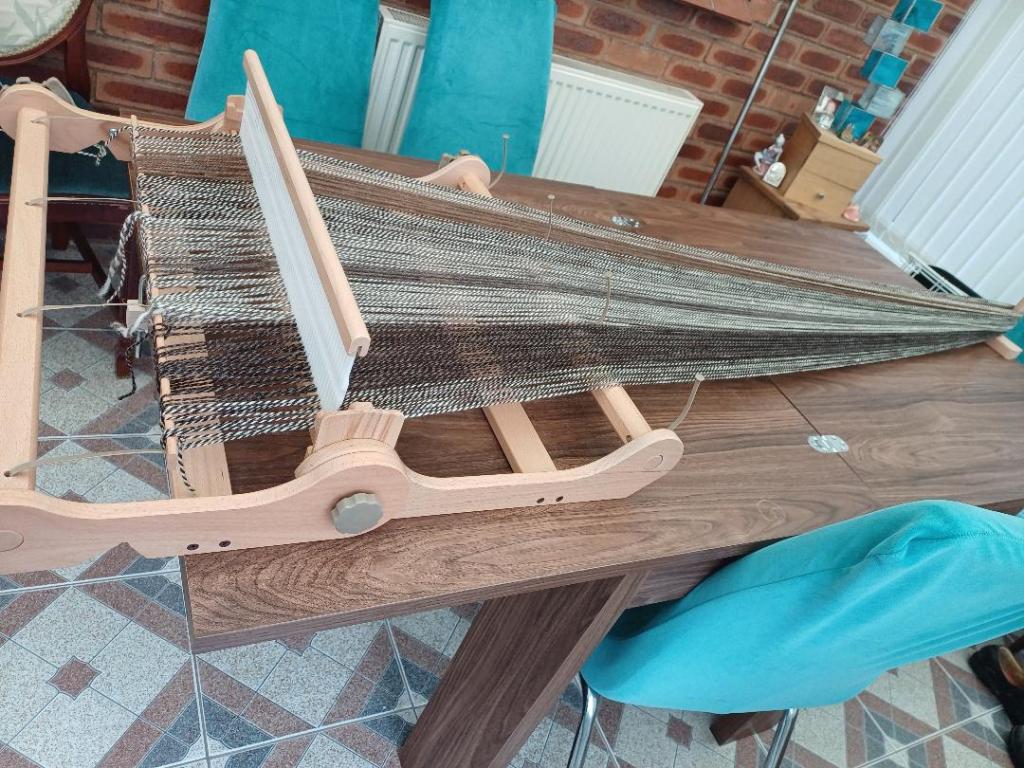
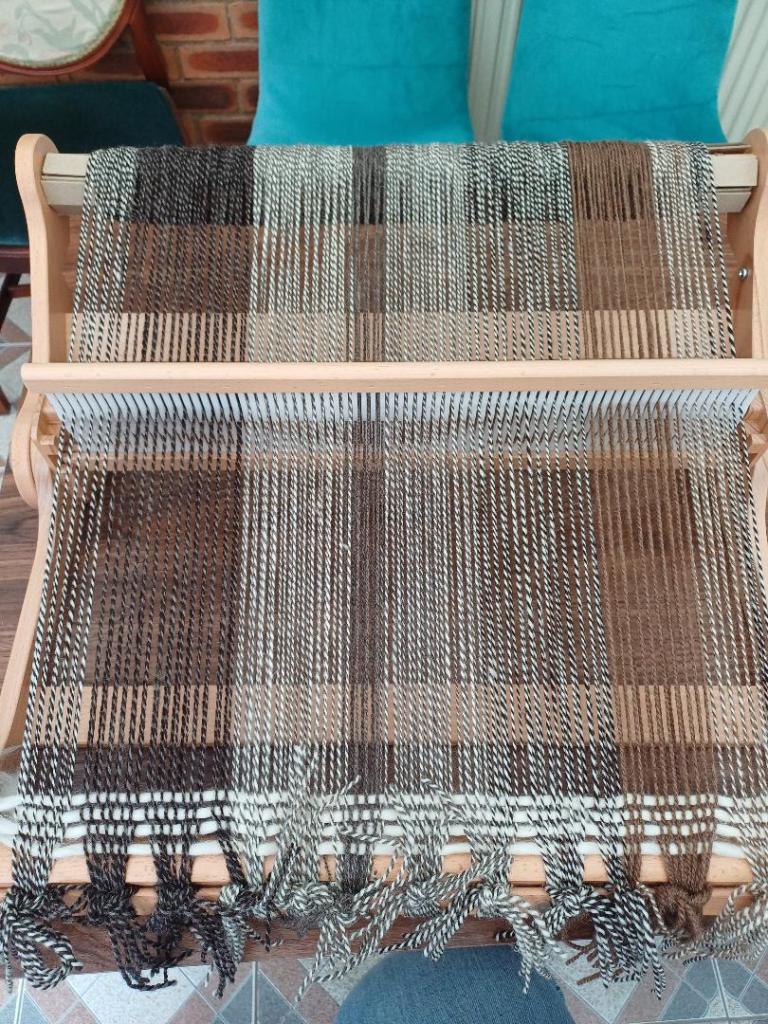
I spent Saturday afternoon at my mums ‘borrowing’ her table to reward the loom…after I spent some time removing what I’d already done. I really enjoyed it, even though it took several hours. My mum talked about my grandma who had been a weaver in the mills, long before I came along! She talked about the warp and weft, the carding room and even returning to work the day after her sone, my uncle, was born. It was so nice to spend the time chatting…felt like my grandma was right with me, and I’ve felt it since.

This is how I ended the day